
The success of the AI and bio-health industries depends on how many convergence-oriented talents, who understand both medicine and science/technology simultaneously, can be secured. While major global universities are accelerating the establishment of medical schools and convergence education, our university has officially commenced the construction of core infrastructure that will determine South Korea's bio-health competitiveness.
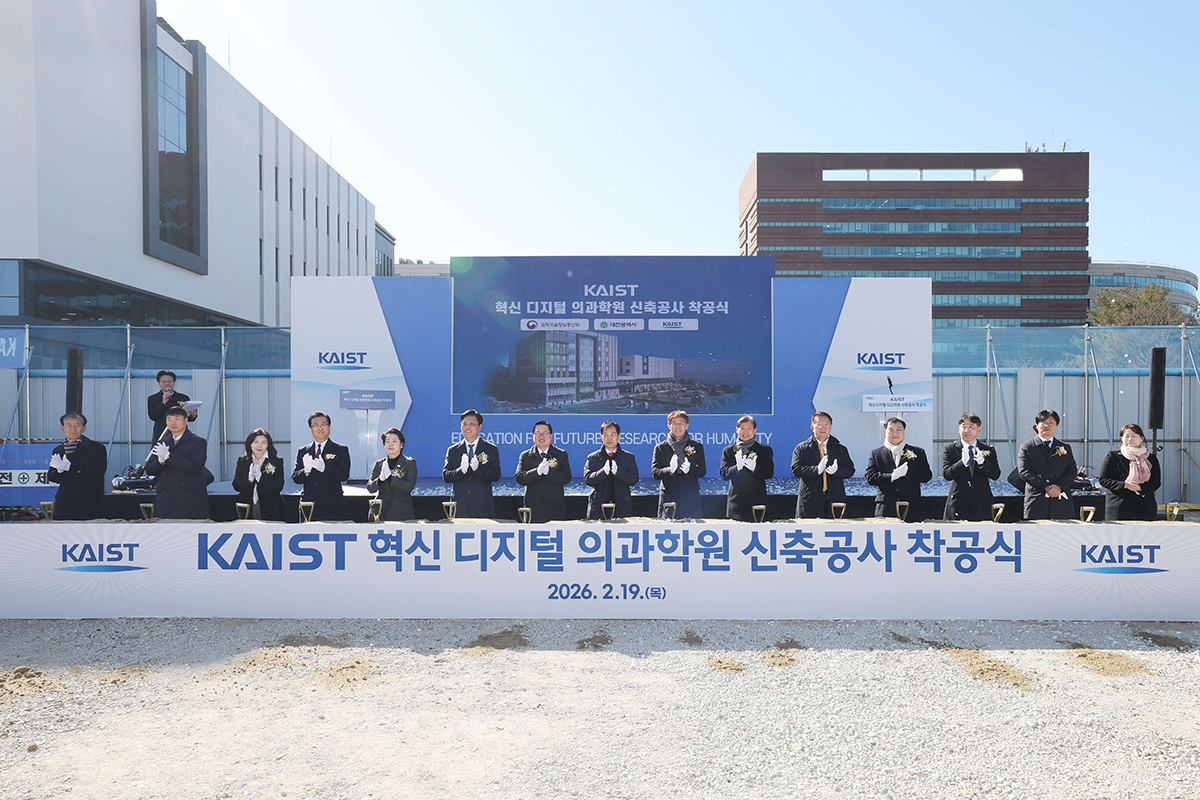
KAIST announced that the Graduate School of Medical Science and Engineering held a groundbreaking ceremony for the ‘Innovative Digital Institute of Medical Science,’ a key infrastructure that will lead the future of the Korean bio-health industry, and has begun full-scale construction.
Through the establishment of this institute, our university expects to create a foundation to expand the scale of physician-scientist training from the current level of about 20 per year to 50–70 per year, which accounts for approximately 50% of the national demand. Through this, we plan to establish a full-cycle support system so that convergence-type talents, who possess medical and clinical experience as well as science, technology, and AI capabilities, can grow into leading figures in the development of innovative new drugs, vaccines, and medical devices.
This talent cultivation strategy is also in line with global trends. Convergence models of science/engineering and medicine are spreading around global science and technology universities, such as the approval for the new medical school at the Hong Kong University of Science and Technology (November 2025), the merger between Tokyo Institute of Technology and Tokyo Medical and Dental University (October 2024), and the establishment and operation of the medical school at Nanyang Technological University in Singapore. This demonstrates the strategic importance of cultivating physician-scientists and medical engineers who will lead the future bio-health industry.
In contrast, the proportion of medical school graduates in Korea entering the fields of physician-scientists or medical engineers remains below 1%, leading to concerns about a decline in future bio-health competitiveness due to a shortage of manpower.
The Innovative Digital Institute of Medical Science will feature advanced research and support facilities, including an AI Precision Medicine Platform Research Center, a Data-driven Convergence Healthcare R&D Center, an Advanced Biomedical Data Analysis Center, a Digital Medical-Bio Open Lab, and open networking halls and seminar rooms.
The Innovative Digital Institute of Medical Science is expected to serve as an innovation hub that supplements the structural limitations of the Daejeon Bio Cluster, moving beyond being a simple education and research facility. Leading domestic bio companies such as Alteogen, LigaChem Bio, and Peptron are concentrated nearby, and the site is adjacent to the ‘Wonchon-dong Advanced Bio-Medical Innovation District’ being promoted by Daejeon City, providing an ecosystem where industry, academia, research, and hospitals are organically connected.
Kwang Hyung Lee, President of KAIST, stated, “The KAIST Innovative Digital Institute of Medical Science will become a core base for the future AI digital health industry, growing science and engineering talents into physician-scientists and medical engineers. Through translational research and startups based on industry-academia-research-hospital cooperation, we will enhance national bio-health industrial competitiveness and contribute to the promotion of human health.”